The Heartbeat of Mexico Through Man and Horse
BrassTuna’s article on Charrería’s importance and cultural preservation.
Written by Developmental Writers Amy Vasquez and Amanda Corona, 2025.
(Edited by Alexis Chubrich)
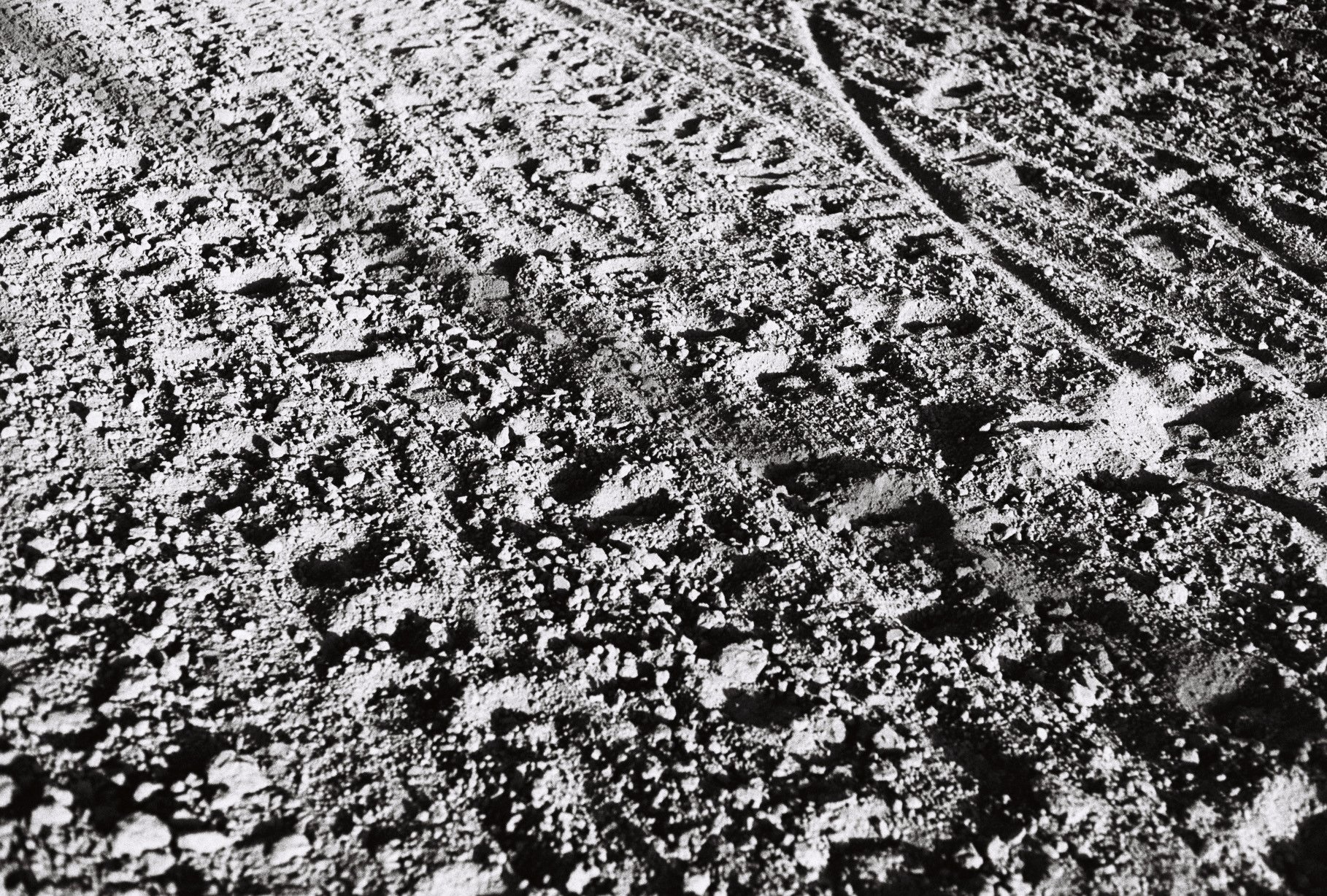
(35mm film photograph taken by BrassTuna, 2025)
Artistic Warriors
Written by: Amy Vasquez
“To dress as a charro is to dress as Mexico.” In these words, Manuel Benítez Carrasco
unveiled a truth: a charro’s attire is not mere clothing, but a living poem stitched in silk, suede,
and silver. It is Mexico’s heartbeat made visible, reflecting the pride of a nation.
Each garment tells a story. The shirt, bound with a proud bow, rests beneath a vest and
jacket embroidered with flowing soutache while greca patterns—first carved from suede, then
sewn with devotion—breathe life into the tailored pants. The leather chaps and belts clasped with
radiant buckles gleam like medals of honor. Above it all, the sombrero—majestic, protective,
unyielding-stands as Mexico’s crown beneath the sun.
For the escaramuza, beauty carries the weight of its history. The Adelita dress highlights
the heroines of the Revolution, with ruffled layers swirling like echoes of battle and song.
Beneath, a crinoline provides shape and strength, while a rebozo, knotted with precision, rests on
her waist like a sash of remembrance. Even her coordinated ribbons, braids, and boots contribute
to the visual harmony of the performance.
In the arena, skill alone is not enough; riding in la charrería embodies both warrior and
artist; strength married with elegance, tradition carried in motion. Each performance is a living
mural where Mexico rides forth in colors, fabrics, and courage.
The Charro attire is inseparable from artistry, an unbroken thread binding past to present,
and a radiant tribute to Mexico’s enduring spirit.
A Brief History of Charreria
Written by: Amanda Corona
A Mexican proverb says, “If the devil takes you, let him take you on a fine horse.” Few
things embody the depth and richness of Mexican heritage quite like Charrería. Dating back to
the 16th century, Charrería emerges alongside the introduction of horses to the Americas during
the period of colonization. As Spanish settlers established themselves, indigenous cultures were
compelled to adapt, resist, and transform in response to the new social, political, and cultural
pressures imposed upon them.
Over the ensuing centuries, horse riding, ranching practices, traditional attire, and
political dynamics profoundly reshaped the Mexican landscape. The sport has seen many
evolutions since its original conception, but the tradition experienced a significant revival and
formalization during the early 20th century, which lends itself to the modern-day sport currently.
Charreria has been passed down through many generations, and many teams are
composed of entire families competing together. According to the Museum of Charrería, “it
should be clear that Charrería was born in the countryside and was regulated in the city, with the
first association established in Mexico City under the name ‘La Nacional’ on June 4, 1921”
(Museo de la Charreria 2023). The sport blends pure danger and adrenaline with lavishness and
showmanship, balancing tradition with innovation.
Charrería’ competitions comprise nine principal events called “Suertes,” these include:
Cala de Caballo, Piales, Colas en el Lienzo, Jineteo de Toro, Terna en el Ruedo, Jineteo de
Yegua, Manganas a Pie o a Caballo, and Paso de la Muerte. These events allow teams to
showcase individual skill alongside collaboration. This enduring tradition intricately weaves
together elements of athleticism, extravagance, and cultural identity, distinguishing Charrería as
Mexico’s national sport.
Work Cited
Agegundez. “Inicio.” Museo de La Charrería CDMX, Agegundez
Https://Museodelacharreria.Org.Mx/Wp-Content/Uploads/2023/07/Logo-Museo-de-La-
Charreria-b-n-300x150.Png, 6 July 2024, museodelacharreria.org.mx/. Accessed 15 Sept. 2025.
CHARRERIA’S HISTORY. Museo de la Charreria. (2023, December 27).
https://museodelacharreria.org.mx/en/history/
Charreria Mexicana: An Equestrian Fold Tradition by Kathleen M. Sands. 1993
Ramírez, Jhoseline. “Vestirse de Charro Es Vestirse de México.” Letra Fría, 14 Sept. 2022,
letrafria.com/vestirse-de-charro-es-vestirse-de-mexico/. Accessed 15 Sept. 2025.
“Traje de Charro de Gamuza de Venado.” Museo de La Charrería CDMX, 1 Oct. 2023,
museodelacharreria.org.mx/coleccion/traje-de-charro-de-gamuza-de-venado/. Accessed 15 Sept.
2025.
“Vestido de Adelita Color Azul.” Museo de La Charrería CDMX, 21 Nov. 2024,
museodelacharreria.org.mx/coleccion/vestido-de-adelita-color-azul/. Accessed 15 Sept. 2025.